Monkey Forest Ubud is one of the easiest Ubud stops to add to a first Bali trip, but the real question is not whether it is famous. It is whether it fits your day flow, crowd tolerance, and interest in culture, temples, and low-effort sightseeing.
For most first-time visitors, Monkey Forest works best as a short-to-medium stop inside a broader Ubud day, not as a full standalone destination. The value comes from atmosphere, temple setting, shaded walkways, and people-watching around the macaques rather than from chasing a big-ticket attraction experience.
This guide helps you decide faster: when Monkey Forest is worth it, how long to stay, what the monkey behavior is actually like, what rules matter most, and how to pair the visit with the rest of your Ubud route.
Fast Pick: Is Monkey Forest Ubud Worth Adding to Your Trip?
Use this shortcut before you work it into your Ubud plan.
- Add Monkey Forest to your route: if you want an easy cultural-nature stop with low logistics friction in central Ubud.
- Keep it short: if your main priority is broader Ubud sightseeing and you do not need a long temple or wildlife visit.
- Go early or later in the afternoon: if you want better walking comfort and fewer crowd bottlenecks.
- Skip loose items and snacks: if you do not want the monkey experience to become the main story of the day.
Next step: compare your Bali base with the Bali area fit guide, then map a realistic day with the 5 to 7 day itinerary before you lock your Ubud route.
1. Welcome to Ubud’s Most Enchanting Experience
Located at the southern edge of central Ubud, the Monkey Forest is home to more than 1,200 long-tailed macaques (as recorded by the Ubud Monkey Forest Management 2026 Report).
Every day, hundreds of visitors wander its shaded paths, where ancient banyan trees meet centuries-old stone shrines.
It’s an easy 10-minute walk from Ubud Palace, making it a convenient stop for any Bali itinerary.
💬 “This forest is where nature, faith, and community meet — it’s not a zoo, it’s a living temple,” says Made Sutirta, senior conservation officer at the sanctuary.
2. What Makes Monkey Forest Ubud So Special
The Story Behind the Sacred Forest
The Monkey Forest, or Mandala Suci Wenara Wana, dates back to the 14th century, serving as both a spiritual site and natural reserve.
It’s built on the Tri Hita Karana philosophy — the Balinese belief in harmony between humans, nature, and the divine.
Cultural and Ecological Importance
Beyond its Instagram fame, this 12.5-hectare sanctuary plays a vital role in:
-
Preserving Balinese Hindu heritage through temple rituals.
-
Maintaining biodiversity, with over 115 species of trees and plants.
-
Educating locals and tourists on wildlife conservation.
The forest is managed by the Padangtegal Village Community, making it a rare model of sustainable tourism that directly supports local families.
3. Quick Facts & Visitor Information (2026 Update)

| Category | Details |
|---|---|
| 📍 Location | Jalan Monkey Forest, Padangtegal, Ubud, Bali |
| 🕒 Opening Hours | 9:00 a.m. – 5:00 p.m. (last entry 4:30 p.m.) |
| 💰 Entrance Fee (2026) | Adults: IDR 80,000 (~USD 5), Children: IDR 60,000 (~USD 3.80) |
| 🐒 Monkeys | 1,200+ long-tailed macaques in 6 social groups |
| ⛩️ Temples | Dalem Agung Padangtegal, Holy Spring Temple, Prajapati Temple |
| 🌳 Area | 12.5 hectares |
| 🌐 Official Website | Official Monkey Forest Ubud website |
4. What to Expect During Your Visit
The Temples
There are three main temples within the sanctuary:
-
Pura Dalem Agung Padangtegal – dedicated to Shiva, the god of destruction and renewal.
-
Pura Beji (Holy Spring Temple) – used for purification rituals.
-
Pura Prajapati – a cremation temple near the cemetery.
Their moss-covered stones, intricate carvings, and tranquil ponds make them incredible photo spots — but remember, entry inside is restricted to worshippers.
The Monkeys
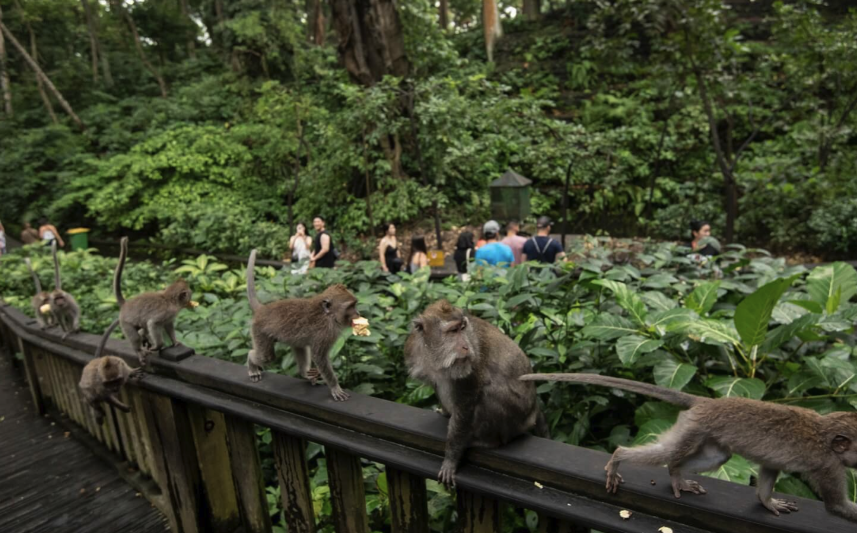
The long-tailed macaques here are charismatic — and mischievous.
They roam freely, often stealing water bottles, sunglasses, or snacks.
The sanctuary emphasizes coexistence, not captivity, so visitors should avoid feeding or touching them.
🧠 Fun fact: Each monkey troop has an alpha male who leads, while young males often form playful alliances — making for endless entertainment and photo moments.
The Jungle Pathways
Boardwalks and bridges weave through dense rainforest, streams, and sacred sculptures.
Keep your camera ready for scenes straight out of an Indiana Jones movie — banyan roots, misty altars, and monkeys posing mid-swing.
5. Entrance Fees, Opening Hours & Location (2026)
| Detail | Information |
|---|---|
| 📅 Open Daily | 9:00 a.m. – 5:00 p.m. |
| 🎟️ Ticket Price | IDR 80,000 adults / IDR 60,000 kids |
| 🧾 Purchase | Available onsite or via official website |
| 🚗 Access | 10 mins from Ubud Palace / 1.5 hrs from Denpasar Airport |
Tickets include access to the entire sanctuary, temple grounds (outer area), and walking trails.
6. Rules & Safety Tips for Visitors
| ✅ Do | 🚫 Don’t |
|---|---|
| Keep belongings zipped or hidden. | Don’t stare directly into monkeys’ eyes. |
| Follow staff instructions. | Don’t feed them (they have natural diets). |
| Stay calm if a monkey climbs on you. | Avoid sudden movements or yelling. |
| Use both hands for cameras. | Don’t bring plastic bags or food. |
⚠️ Note: The monkeys are curious, not dangerous — but they associate plastic bags with food. Hide snacks inside your bag before entering.
7. Best Time to Visit and Local Insights
-
Morning (9–11 a.m.): Best for photos — soft light and active monkeys.
-
Afternoon (3–5 p.m.): Calmer atmosphere, fewer tour groups.
-
Avoid mid-day (12–2 p.m.) if you dislike heat and crowds.
-
Dry season (April–October): Ideal for walking the trails without slippery paths.
Combine your visit with nearby attractions like:
-
Ubud Palace (10-minute walk)
-
Ubud Art Market (easy to pair with the same central Ubud walk)
-
Tegalalang Rice Terrace (20 minutes drive)
8. Where to Stay Near Monkey Forest Ubud
| Accommodation | Distance | Price (USD/night) | Highlights |
|---|---|---|---|
| Komaneka at Monkey Forest | 5 mins walk | $160 | Boutique luxury, jungle view |
| Alaya Resort Ubud | 3 mins walk | $130 | Eco-luxury, on-site spa |
| Champlung Sari Hotel | Adjacent | $70 | Great value, walk-in access |
| Bisma Eight | 10 mins | $180 | Modern design, rooftop pool |
💡 Tip: Staying close lets you enjoy the forest early before the crowds arrive — plus, you might even hear monkeys from your balcony!
9. Final Thoughts – Why Monkey Forest Is a Must-See in Bali
The Monkey Forest Ubud isn’t just another tourist stop; it’s an experience that captures the soul of Bali — harmony between nature, spirituality, and humanity.
It’s where you can witness ancient temples reclaimed by nature, monkeys roaming freely, and Balinese culture thriving in every detail.
Whether you come for a quick visit or a full-day exploration, you’ll leave with memories (and probably a few funny monkey stories) that last a lifetime.
Next step: pair Monkey Forest with a realistic Ubud day flow in the 5 to 7 day Bali itinerary, or check the official Monkey Forest Ubud website for ticket and visitor updates.
FAQ – Monkey Forest Ubud
1. Is Monkey Forest safe for children?
Yes, it’s family-friendly. Children should stay close to adults and avoid sudden movements near monkeys.
2. Can I feed the monkeys?
No. Feeding is strictly prohibited — staff provide them with daily food to keep balance and safety.
3. How long should I spend there?
Most visitors stay around 1.5–2 hours, exploring the temples and trails.
4. Are there lockers or facilities?
Yes, there are toilets, small shops, and ticket counters at the entrance, but no lockers — bring minimal valuables.
5. What should I bring?
Water bottle, comfortable shoes, and a camera. Avoid loose jewelry or open snacks.