Ubud Art Market is one of the easiest stops to add to a first Bali trip when you want a central Ubud experience that combines souvenir shopping, people-watching, and local atmosphere in one low-friction visit. The real question is not whether it is famous. It is whether you know when to go, what to buy, and how to avoid turning the visit into random tourist browsing.
For most first-time visitors, the market works best as a short stop paired with Ubud Palace, Monkey Forest, cafes, or a broader Ubud day rather than as a major standalone attraction. The value comes from timing, bargaining comfort, and choosing items that actually feel worth carrying home.
This guide helps you decide faster: when the market is worth your time, how the morning and daytime sessions differ, what items are most worth prioritizing, and how to bargain without turning the experience awkward or exhausting.
Fast Pick: Is Ubud Art Market Worth Your Time?
Use this shortcut before you work it into your Ubud route.
Next step: pair the market with the Monkey Forest Ubud guide, map your day with the 5 to 7 day itinerary, and compare your trip base in the Bali area fit guide.

Part I: The Rhythm of the Market – Morning vs. Afternoon
The Ubud Art Market is a shapeshifter. Depending on what time you arrive, you will experience two completely different worlds.
1. The Morning Market (6:00 AM – 9:00 AM)
Before the sun is fully up, the market belongs to the locals. This is the Ubud Morning Market. The artisanal crafts are hidden away, replaced by mountains of dragon fruit, piles of spicy red chilies, and the morning’s fresh catch.
- The Story: You’ll see Balinese grandmothers in traditional sarongs negotiating over the price of canang sari (daily offerings). This is the best time to see the “authentic” Bali.
- Pro Tip: If you want a truly unique souvenir, buy some local spices or Balinese coffee here before the “art” vendors take over.
2. The Art Market (9:00 AM – 6:00 PM)
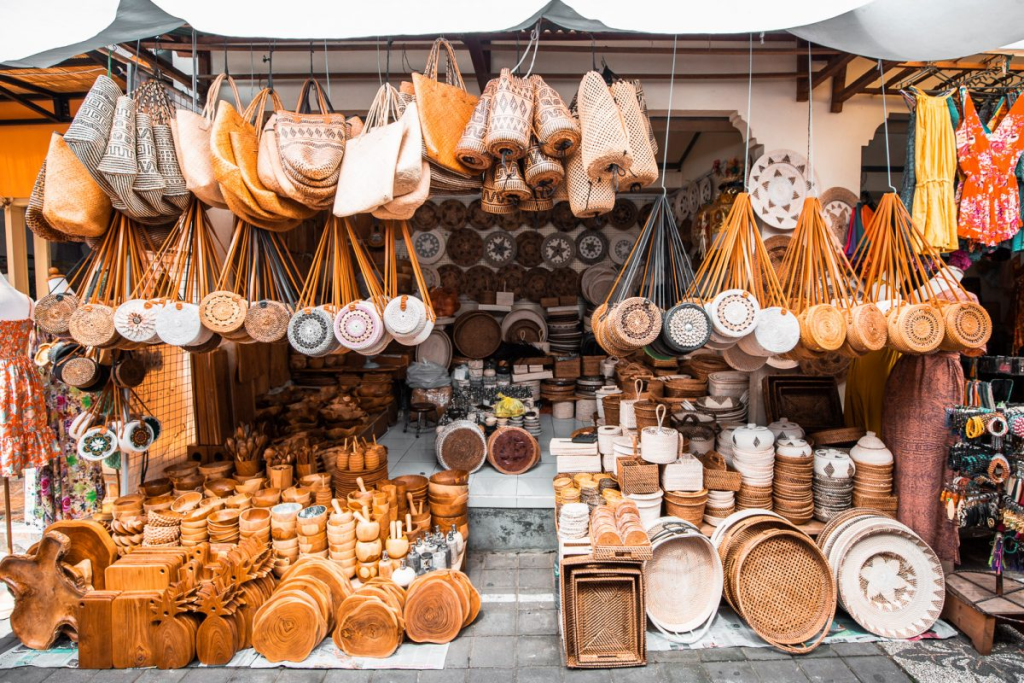
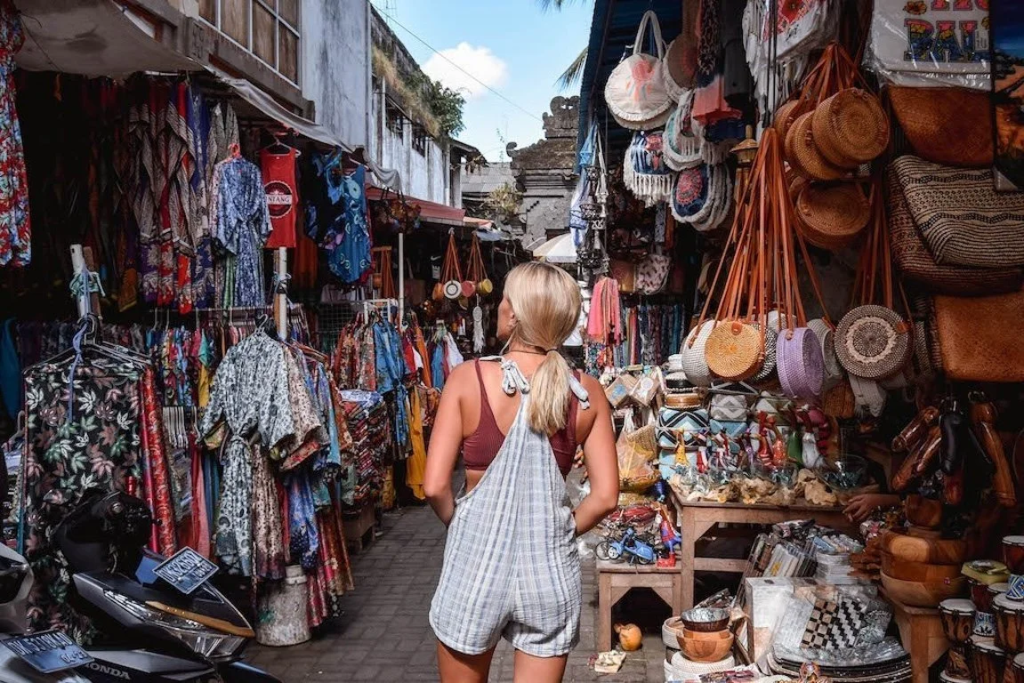
As the grocery stalls pack up, the “Art” begins to emerge. Blankets are laid out, and the iconic rattan bags are hung from the ceilings. This is the world-famous market featured in the movie Eat Pray Love.
- The Atmosphere: It becomes a bustling hive of global travelers. You’ll hear a dozen different languages being spoken, all punctuated by the rhythmic clicking of calculators—the universal language of bargaining.
Part II: Why the Ubud Art Market is Unique for Foreigners
Why does this market attract millions of visitors every year? It’s not just about the shopping; it’s about the provenance.
1. Sourced from Neighboring Artisan Villages
Unlike mass-produced souvenirs you might find in Kuta or Seminyak, the items here are often brought in from specialized villages surrounding Ubud.
- Tegallalang sends the delicate wood carvings.
- Celuk provides the intricate silver jewelry.
- Pengosekan contributes the vibrant canvas paintings. When you buy a mask at the Ubud Art Market, you are often buying a piece of art that was carved just a few miles away in a family workshop.
2. The Philosophy of “Penglaris” (The First Sale)
For first-timers, the interaction with vendors is a cultural lesson. Balinese vendors believe that the first sale of the day (Penglaris) brings luck for the next ten hours.
- The Magic: If you arrive early, a vendor might accept a much lower price than usual just to secure that “lucky” first transaction. They will often take your money and “tap” it against all their other goods to spread the fortune.
3. A Living Gallery of Balinese Aesthetics
Nowhere else can you see the evolution of Balinese design so clearly. You’ll find traditional batik fabrics—ancient patterns passed down through generations—sitting right next to modern, “Boho-chic” dresses designed for the global fashionista.
Part III: The Treasures You Must Seek
For a first-timer, the sheer volume of goods can be paralyzing. Here is your “Curated Shopping List” for 2026:
| Item | What to Look For | Why It’s Special |
| Ata/Rattan Bags | The classic round “Bali Bag.” Smell it—it should have a slight smoky scent from being dried over coconut husks. | It is durable, stylish, and synonymous with the Bali vacation aesthetic. |
| Silver Jewelry | Look for the “925” stamp. Intricate “Granulation” work (tiny silver dots) is a Balinese specialty. | You are getting world-class craftsmanship at a fraction of the price of Western boutiques. |
| Barong T-Shirts | Soft, breathable cotton with the fierce face of the Barong (the protector spirit). | It’s the unofficial “uniform” of a Bali traveler and a perfect, lightweight gift. |
| Wood Carvings | Look for the grain of the wood. Heavy woods like suar or hibiscus are higher quality than light, painted woods. | Bali’s woodcarvers are world-renowned; a small statue brings the island’s energy into your home. |
Part IV: The Art of the Deal – How to Bargain Like a Pro
Bargaining in Bali is not a battle; it is a social dance. If you approach it with aggression, you’ve already lost. If you approach it with a smile, you’ll leave with a friend and a bargain.
- Start at 50%: When a vendor gives you a price, politely counter with half. If they say 200,000 IDR, you say 100,000 IDR.
- The “Walk Away” Technique: This is the most powerful tool in your belt. If the price isn’t reaching your target, smile, say “Terima Kasih” (Thank you), and slowly walk away. More often than not, they will call you back with a “special price.”
- Volume is King: Want three sarongs? You’ll get a much better deal than if you just buy one.
- Carry Small Cash: It is hard to bargain a price down to 50,000 IDR and then hand over a 100,000 IDR note. Having small denominations (10k, 20k, 50k) makes the transaction smoother.
Part V: Essential Visitor Information (2026 Update)
- Location: Directly across from the Ubud Royal Palace on Jalan Raya Ubud.
- Entrance Fee: Free.
- Accessibility: The market underwent renovations in recent years, making the pathways slightly wider and more navigable, though it still maintains its traditional labyrinthine charm.
- Parking: If you are arriving by scooter, there is underground parking in the basement of the market building for a small fee (approx. 2,000 IDR).
FAQ: Ubud Art Market Essentials
Q: Is the Ubud Art Market a tourist trap? A: No, but it is very popular. While prices are inflated for tourists, the quality of the handicrafts is genuine. If you bargain, you are getting excellent value for handmade goods.
Q: Can I pay with a credit card? A: While a few larger shops on the outskirts accept cards, the vast majority of stalls are cash only. Always have Indonesian Rupiah on hand.
Q: How long should I spend there? A: For a first-timer, 1.5 to 2 hours is the sweet spot. This gives you time to explore both floors and the surrounding side streets.
Q: Is there food at the market? A: The art market itself is focused on crafts, but the morning market has local snacks. For a proper meal, head across the street to Milk & Madu or Lazy Cats Cafe.
Conclusion: Why You Can’t Leave Bali Without Visiting
The Ubud Art Market is more than a place to buy a souvenir; it is a place to witness the resilience and creativity of the Balinese people. Every time you look at that rattan bag or silver ring back in your home country, you will be transported back to that narrow alleyway in Ubud, the smell of incense, and the smile of the vendor who sold it to you.